Could your diet support your vision?
As autumn arrives and many people begin focusing on their health and wellbeing, Edmonds & Slatter Opticians is encouraging patients to take a closer look at the relationship between nutrition and eye health.
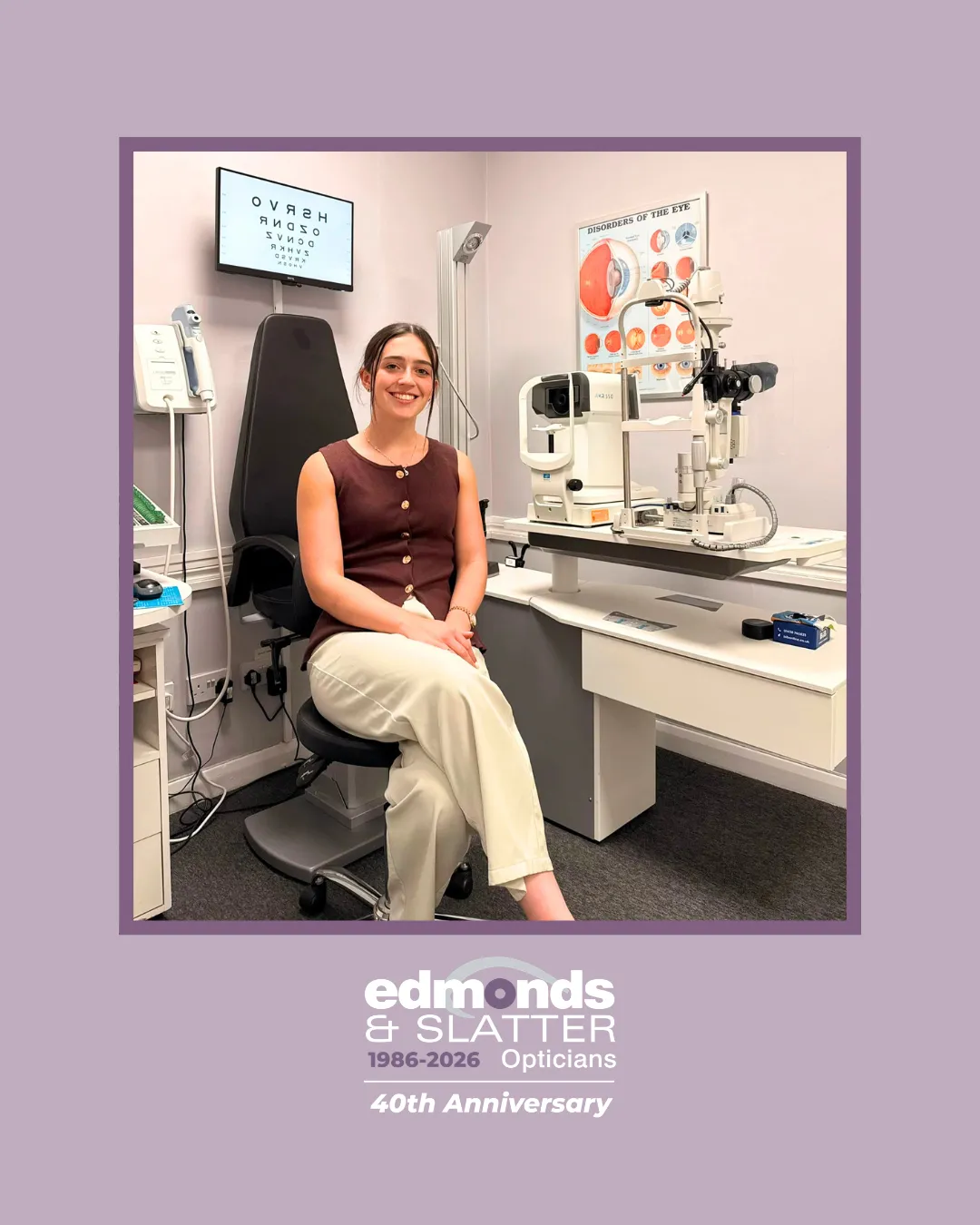
Leading the initiative is Emily Steele, Edmonds & Slatter's Nutritional Eye Health Champion, who is helping patients learn more about carotenoids and their role in eye health through dedicated carotenoid scanning clinics across the group.
The quick, non-invasive carotenoid scan uses advanced optical sensing technology to assess carotenoid levels within the skin by analysing how light interacts with the index finger. Taking less than three minutes, the scan provides an indication of an individual's skin carotenoid levels, offering an insight into nutritional patterns associated with the consumption of carotenoid-rich foods [1,2].
Carotenoids are naturally occurring pigments found in a variety of colourful fruits and vegetables, including spinach, kale, broccoli, peppers and carrots. Many carotenoids also have antioxidant properties [3]. Three carotenoids in particular - lutein, zeaxanthin and meso-zeaxanthin - are concentrated within the macula, where they collectively form the macular pigment [4,5]. This naturally occurring yellow pigment plays an important role in absorbing short-wavelength blue light and providing antioxidant protection within the retina [4,5].
The macula is responsible for our sharpest central vision, allowing us to read, drive, recognise faces and see fine detail [6]. Macular pigment helps to absorb potentially harmful blue light and provides antioxidant protection against oxidative stress within the retina [4,5]. Researchers continue to investigate the relationship between macular pigment, nutritional intake and long-term retinal health, including its potential relevance to age-related macular degeneration (AMD), one of the leading causes of sight loss in older adults [4,5,7].
Although the skin carotenoid scan does not directly measure macular pigment or assess eye health, it provides patients with an opportunity to learn more about their skin carotenoid levels and consider how their diet and lifestyle may influence these levels [1,2].
Emily Steele said:
"Many patients are surprised by their results. The scan is a simple way of helping people understand the connection between nutrition and eye health benefits. The carotenoids that make up macular pigment play an important role in protecting the retina and supporting the part of the eye responsible for our sharpest vision. Seeing their result often encourages patients to make small, positive changes to their diet that can benefit their overall health as well as their eyes."
For patients interested in learning more about macular carotenoids, Edmonds & Slatter also stocks MacuPrime®, a nutritional supplement containing lutein, zeaxanthin and meso-zeaxanthin – the three carotenoids found within macular pigment [4,8].
A healthy, balanced diet containing a variety of leafy green vegetables and brightly coloured fruit and vegetables provides a natural source of dietary carotenoids. Nutritional supplements containing macular carotenoids are also available for those wishing to explore their nutritional options. Any decision to take a supplement should be considered alongside an individual's overall diet and nutritional needs [4,5,9].
As the leaves change colour this autumn, Edmonds & Slatter is encouraging patients to add a little more colour to their plates too. A varied, balanced diet is an important part of looking after overall health, and understanding the relationship between nutrition and eye health is a positive step towards making informed lifestyle choices.
If you are interested in booking a carotenoid scan, please contact your local Edmonds & Slatter practice for availability.
References
1. Radtke MD et al. (2020). Criterion-Related Validity of Spectroscopy-Based Skin Carotenoid Measurements as a Proxy for Fruit and Vegetable Intake: A Systematic Review. Advances in Nutrition, 11(5), 1282–1299.
2. Prysm iO. How the Prysm iO Scan Works. Manufacturer information on optical sensing and skin carotenoid measurement. manufacturer information
3. Arunkumar R, Gorusupudi A, Bernstein PS. (2020). The macular carotenoids: A biochemical overview. Biochimica et Biophysica Acta, 1865(11), 158617.
4. Bernstein PS et al. (2016). Lutein, zeaxanthin, and meso-zeaxanthin: The basic and clinical science underlying carotenoid-based nutritional interventions against ocular disease. Progress in Retinal and Eye Research, 50, 34–66.
5. Arunkumar R et al. (2020). The macular carotenoids: A biochemical overview. Particularly relevant to macular pigment, blue-light absorption and antioxidant protection.
6. NHS. Age-related macular degeneration (AMD) – Symptoms. NHS guidance
7. Bernstein PS et al. (2016). Review of macular carotenoids and their potential relevance to ocular disease, including AMD.
8. MacuPrime UK. Product formulation and ingredients. Manufacturer information
9. Advertising Standards Authority. CAP Code Section 15 – Food, food supplements and associated health or nutrition claims.